


Herding Goats Across Continents: How We Took 100 People From Around the World to Turkey for an Offsite (and Lived to Tell the Tale)
Kyle Flanagan
 Percona
Every great journey needs a guide.
Ours just happened to be a mountain goat.
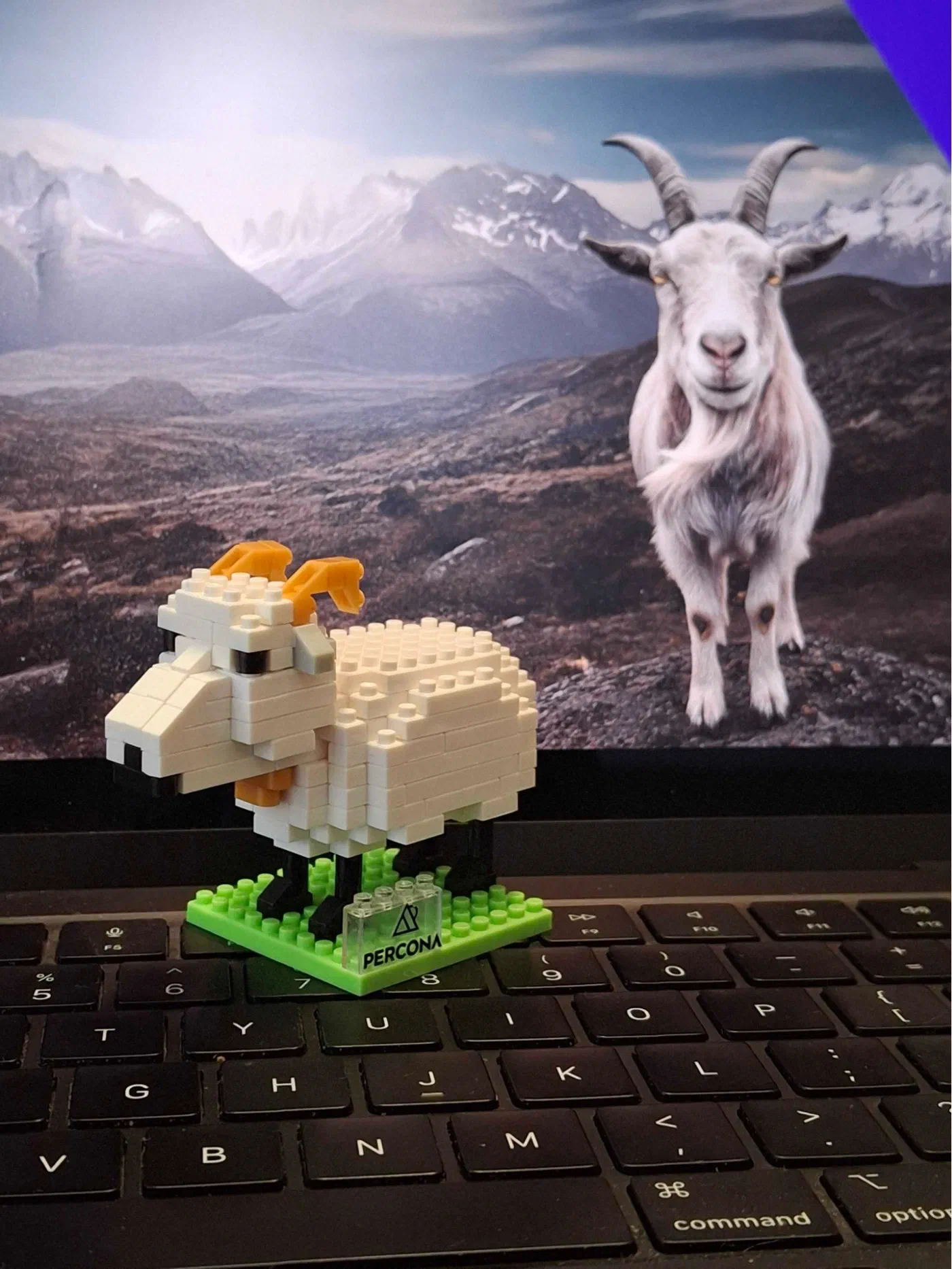
Fresh off a brand-new Percona branding reveal — complete with a rugged mountain goat mascot, a custom-made goat cake, and even a (surprisingly inspirational) LEGO mountain goat — we set out to bring our global Software Engineering team together in Turkey.
And while planning an offsite for a fully remote, globally distributed team sounds simple enough… just wait until you try to do it.
We’re talking about 100 people, 30+ countries, coordinating over 200,000 miles of travel, multiple time zones, passports, dietary restrictions, flight delays, and the occasional “wait, what do you mean my passport expires in three months?” (you know who you are) moment. Suddenly, you’re not just planning a trip — you’re orchestrating a small traveling universe.
Welcome to the step-by-step story of how we brought a global Percona team together in Turkey, and what it really takes to make something like this happen.
Step One: Accept That Details Are Your New Personality
When planning an offsite of this scale, you quickly learn one thing: there is no such thing as being “too detailed.”
There is also no such thing as too much information, or having too much collaboration, when it comes to working through the countless moving pieces.
Success at an event like this doesn’t come from starting from scratch. It comes from leaning heavily on the people who have done it before. Their experiences, lessons learned, and even their past mistakes are incredibly valuable.
We needed to actively seek out those insights, ask questions, and build on what already existed rather than reinventing the wheel. If previous events weren’t successful, you probably wouldn’t be doing it again. Lean into previous experiences and successes.
At the same time, it’s not just about repeating what’s been done — it’s about refining it. Each offsite should be a better, more thoughtful version of the last. That means taking previous experiences, identifying what worked and what didn’t, and making deliberate improvements across logistics, communication, and attendee experience.
None of this happens last minute. To truly manage expectations and execute smoothly, planning conversations need to start early — ideally 6–8 months in advance (even though the Percona Turkey retreat was accomplished in just four months). That runway gives teams the time to align on goals, pressure-test ideas, collaborate across functions, and work through the inevitable complexities that come with an event of this scale.
Success lies in thinking through every single touchpoint of the attendee experience. From the moment attendees board their flight, train, car, or motorcycle to the final farewell high-five, it’s an experience.
Paying close attention to each touchpoint shows up in many moments, including:
- Branded coasters placed on every table setting during business meetings (yes, people notice)
- Signage throughout the venue so no one ends up in a yoga class instead of a database workshop
- Check-in gifts that reinforce the Percona brand (and maybe include a surprise or two… goat-related, naturally)
- Carefully planned cocktail hours where “networking” magically turns into genuine connection
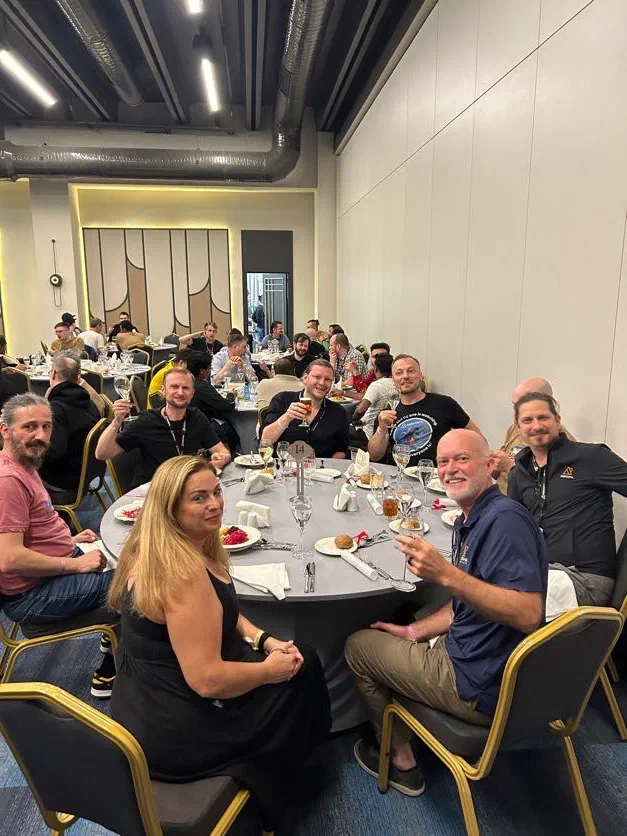
- Group dinners where teammates finally meet the humans behind the Slack avatars
- A candy swap featuring treats from every country represented — it doesn’t need to be formal. Everyone piles their local candies on a table for the masses
- A myriad of team-building activities spanning four days, including a competition to build the tallest free-standing printer-paper tower using only paper and tape (sidenote: be prepared for every single team to think that they won and the other teams cheated)
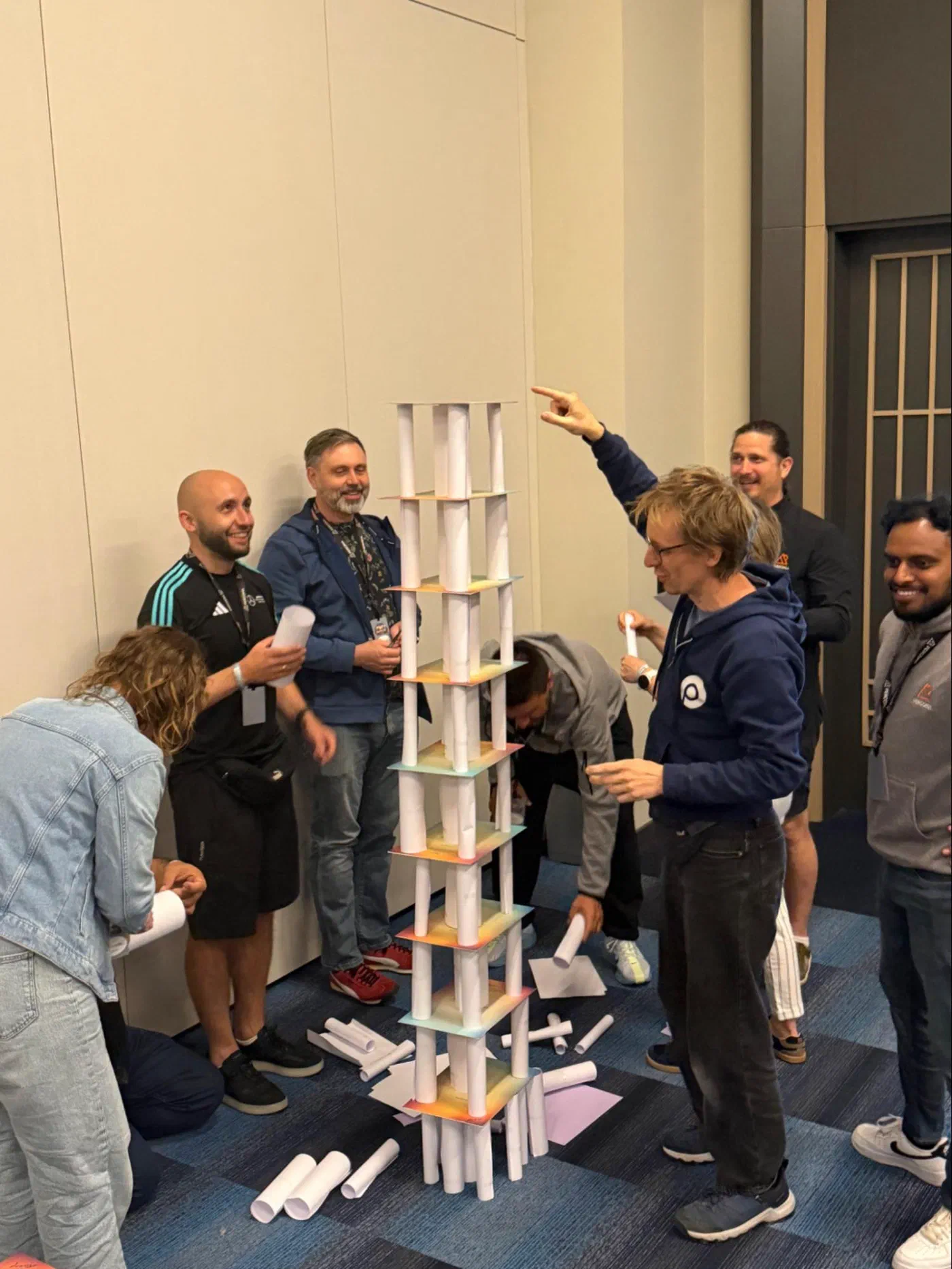
But what people remember most isn’t just the agenda, t-shirts, stickers, goat swag, candy, or coffee breaks. It’s the combination of these thoughtful touches woven into every moment.
It’s not just logistics that make the trip — it’s using those details and that collaboration to master storytelling.
Step Two: Time May Not Be on Your Side (But Deadlines and Effective Communication Are)
A trip like this doesn’t come together overnight. But sometimes it needs to come together pretty close to overnight. That means a very well thought-out internal communications plan and schedule that answers as many questions as possible before they are even asked.
But no matter how solid a formal communications plan is, there will be moments when questions get asked that were already addressed — which is why finding other ways to communicate, collaborate, and involve stakeholders and attendees is crucial. Think dedicated Slack channels with full transparency and readily available information, weekly touchpoints with department heads who can convey updates and reminders to their teams, and frequent conversations with finance, human resources, and legal throughout.
Behind the scenes, you’re looking at 100–150 hours of internal planning — all before the first suitcase is packed.
With that level of complexity, time becomes both a constraint and a forcing function. Deadlines matter, timelines matter, and how you communicate along the way matters even more. Clear, consistent communication is what keeps everything moving forward when there are dozens of parallel workstreams and stakeholders involved.
Internally, communication has to be frequent, detailed, and often repetitive. There’s no room for assumptions or “I thought someone else had that covered.” Every update, decision, dependency, and small detail needs to be shared openly and documented so nothing slips through the cracks.
The more visibility the team has, the more aligned everyone stays.
That means being proactive, not reactive. Attendees need consistent touchpoints leading up to the trip: detailed itineraries, travel guidance, visa reminders, packing expectations, local logistics, and clear points of contact. Information should be centralized, easy to access, and reinforced multiple times so no one is left guessing.
During the event, communication doesn’t stall. In fact, it accelerates — with adaptability, pivots, and clear, concise explanations.
Real-time updates, schedule reminders, transportation details, and contingency plans all need to be communicated clearly and quickly. When done right, attendees feel taken care of, confident, and fully present in the experience rather than worrying about logistics.
At the end of the day, strong communication — both internally and externally — is what turns a complex, global operation into something that feels seamless. It’s not just about sharing information; it’s about creating clarity, building trust, and ensuring every single person knows exactly where they need to be and when.
This also means over-communicating by design. Weekly check-ins turn into twice-weekly syncs as the event gets closer. Quick updates become detailed run-of-show documents. Slack threads involving all attendees, shared docs, and status trackers become the backbone of execution. It may feel like a lot, but that level of transparency is what prevents last-minute surprises.
Oh yeah — then there’s vendor coordination and communication.
Hotels. Transportation. AV teams. Catering. Swag production. Signage. Shipping. Local experiences. Backup plans for your backup plans.
Each one comes with:
- Deadlines
- Dependencies
- Payment schedules
- And the occasional “we need final numbers by tomorrow or your menu disappears” situation
Miss a deadline? That’s not just a small hiccup — it can mean:
- Increased costs
- Limited availability
- Or a last-minute scramble that no one wants to experience
Precision, effective communication, and timing aren’t optional — they’re everything.
Step Three: Build the Experience, Not Just the Agenda
You can have the best presentations in the world, but that’s not what people will remember.
What they will remember — and what they will certainly talk about afterwards:
- The first time they met a teammate in person after years of working together online
- The laughs over dinner
- The spontaneous conversations during coffee breaks
- The shared “we made it here” energy
For a company like Percona — 100% remote, spanning 50+ countries — these experiences and moments aren’t just nice-to-haves. They’re essential.
An offsite like this creates:
- Stronger team bonding across regions and roles
- Real human connections that make collaboration smoother
- Cross-functional understanding that Slack threads simply can’t replicate
- A sense of belonging that transcends time zones
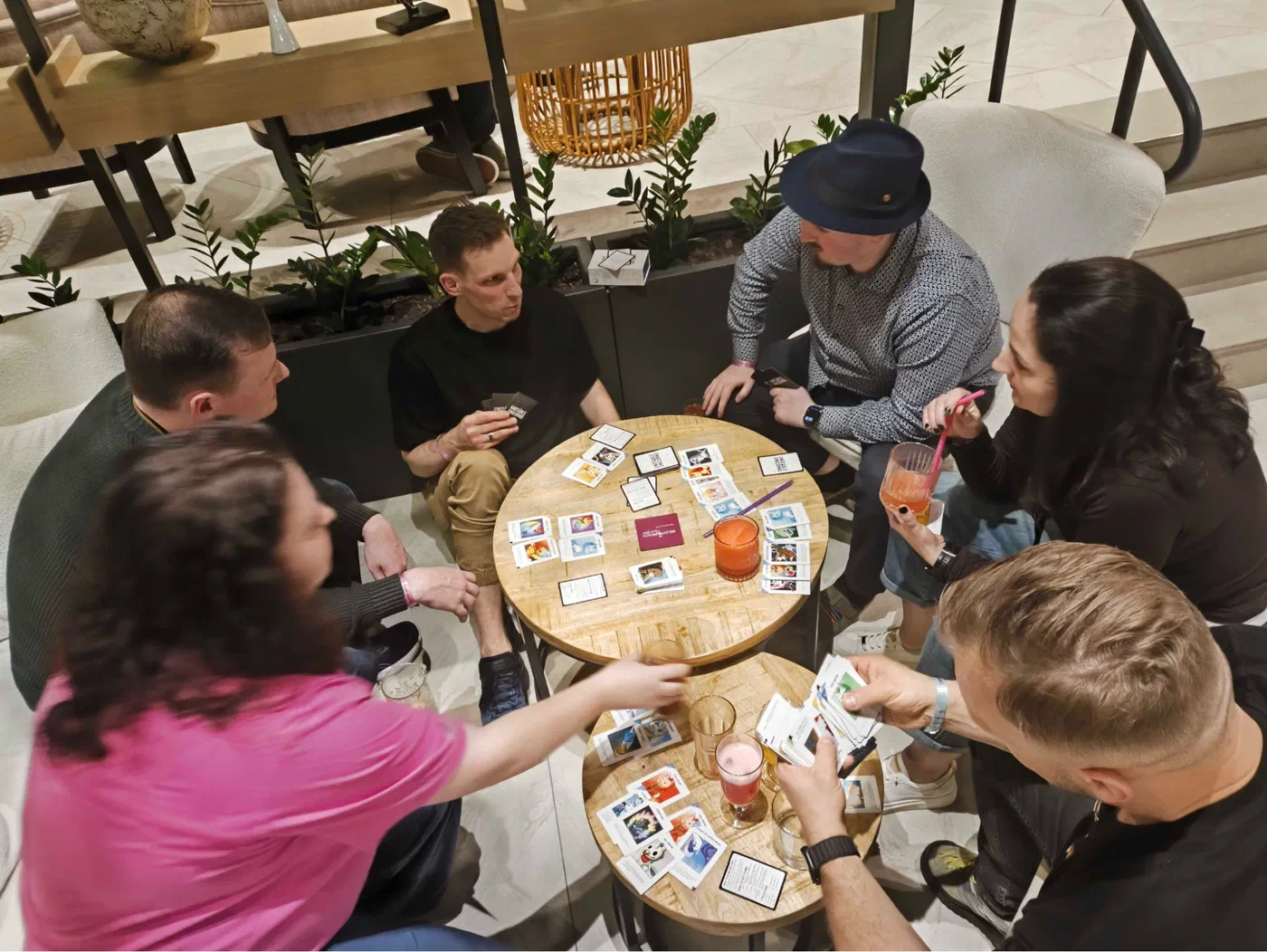
In short: it turns coworkers into teammates. As a remote-only company, Percona has a uniqueness with nearly 14% of employees who have been with the company for 10+ years. This isn’t an accident — it’s a direct result of the kind of networking, partnership, and friendships that these types of retreats create.
The agenda for an offsite retreat should be intentionally designed to educate, inspire, and elevate the overall experience — not just fill time on a schedule. Every presentation needs to be thoughtfully curated to add real value, ensuring it contributes meaningfully rather than feeling like content for content’s sake.
Step Four: Expect the Unexpected (and Pack Snacks)
No matter how well you plan, something will go sideways.
Flights will be delayed. Luggage will take a scenic tour of another country. Someone will forget something important (realistically, multiple someones).
The key is not avoiding problems, but trusting yourself, your team, and your planning to be ready for them.
A few survival tips:
- Always have contingency plans (plural). Seriously. Always. And seriously — plural. Hurricane hitting the beach on closing outdoor dinner night? Have a space ready to go and an action plan for communicating the pivot. All your swag held up in customs? Find the local flea market and craft shops and make your gifts local. Speaker forgot a slide advancer and the venue’s failed and the venue’s backup failed? Keep one on the ready with you at all times.
- Over-communicate everything. You can’t tell people important things too many times.
- Build buffer time into the schedule. Imagine trying to get your three-year-old out the door early in the morning. It’s like that, but with 100 adults. Give yourself some cushions.
- Keep a sense of humor handy — it’s arguably your most valuable tool. You can diffuse a lot of tension with a little humorous quip. Humor brings the tension down, eases the panic, and grounds everyone. Even the most panic-stricken, reactionary executive you’ve ever met enjoys a good laugh in tense moments.
- Slow down — panic happens when speed outmaneuvers thought. It’s not a race, and you don’t have to beat everyone to a solution. Trust yourself and trust your team, and slow down enough to think through clearly without the heaviness of undue pressure.
Step Five: Remember Why You’re Doing It
After the spreadsheets, the emails, the vendor calls, and the 47th revision of the rooming list, it’s easy to forget the bigger picture.
But then the event starts.
People arrive. Conversations spark. Teams connect. Ideas flow. Energy builds.
And suddenly, all 100–150 hours (and then some) make perfect sense.
What you’ve created isn’t just an offsite — it’s an experience that strengthens your team in ways no virtual meeting ever could.
Don’t lose sight of your objective.
Final Thoughts: Keep Climbing
Bringing 100 people across the world to Turkey wasn’t easy — but it was worth every detail, every deadline, and every late-night planning session.
When you return home from executing a trip like this, you will want to shut off all notifications and take a few days to yourself without having to resolve anything. But also make sure you ponder what you would have liked to see done differently. Would arranging transfers from the airport to the resort be more cost-effective and smooth than relying on taxis? Most likely. Would building in more leisure time and opportunities for attendees to explore the local surroundings be worth sacrificing one or two sessions of training? Absolutely.
Learn from that and adapt for next time.
Because at the end of the day, investing in your people — especially in a remote-first world — is one of the most impactful things you can do.
And if that investment comes with a mountain goat mascot, a LEGO companion, custom cakes, coasters, t-shirts, drinks, food, and out-of-shape pickup basketball games, then you will find a team that fully leans into the journey and the message.
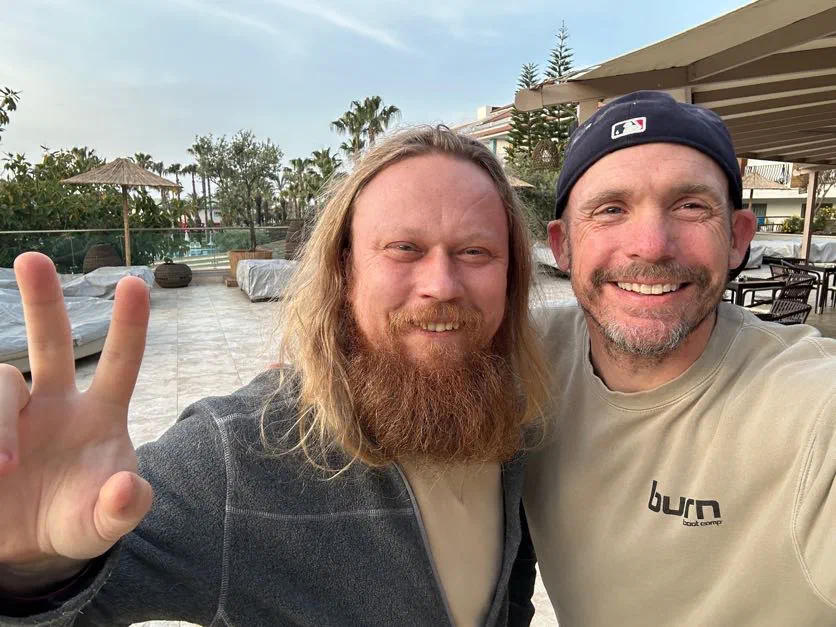
We came as individuals from across the globe.
On the day the retreat ended, I found myself in a rental car with a colleague I’d never met in person before. Two co-workers from different sides of the globe, different cultures, and two very different paths that led us to that spot. We drove for a full day, exploring site after site and chatting and laughing about life, work, and music.
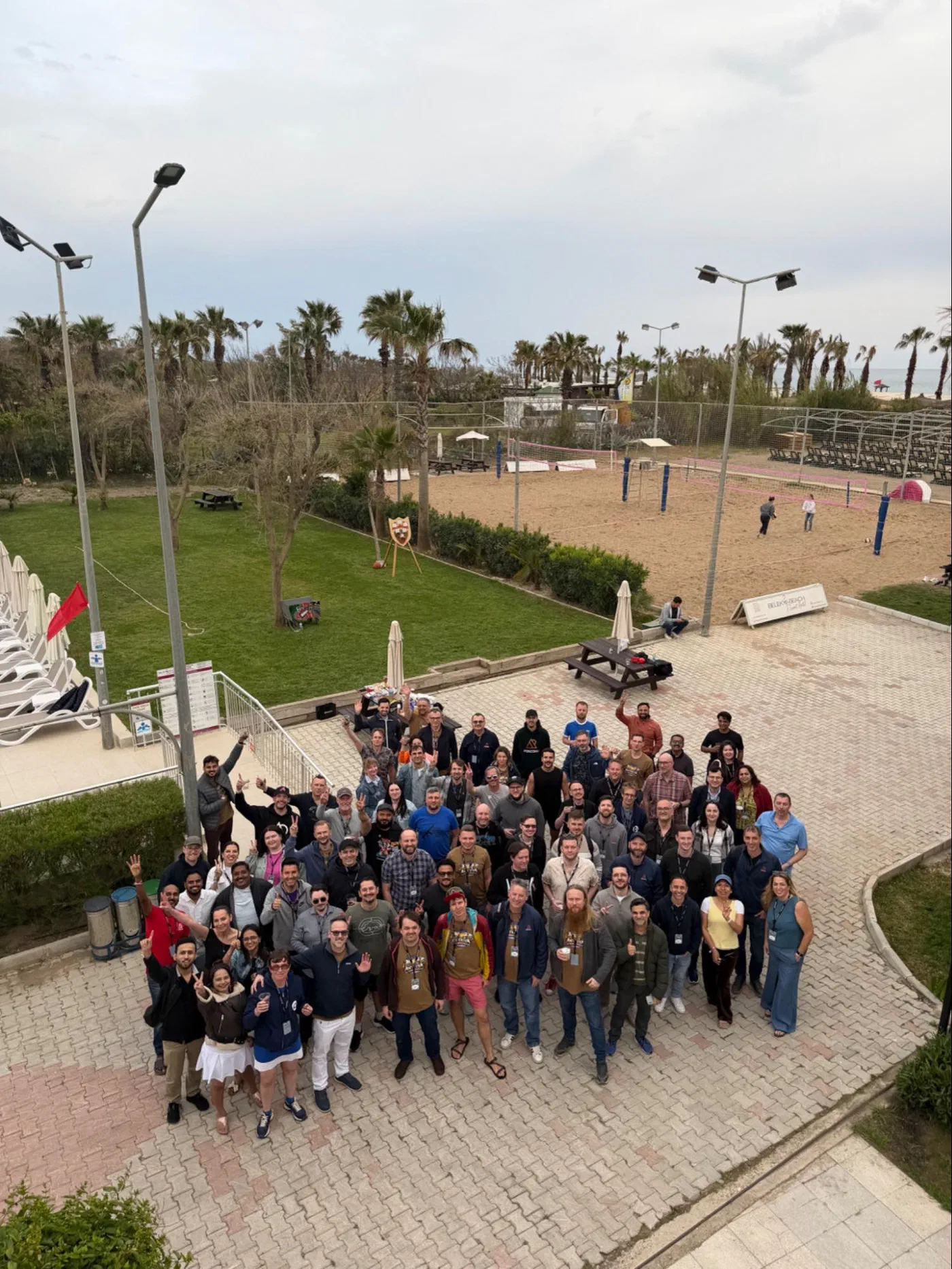
This interaction and moment doesn’t happen without retreats like this.
We came together as members of the Software Engineering group at a place we all worked, and left as a unified team of Perconians — and as friends.
That’s your real ROI. ∎


Discussion
We invite you to our forum for discussion. You are welcome to use the widget below.